What the Best Psychological Thriller Books Like Steel House Lake
The 25 All-time Psychological Thrillers of All Time
From Hitchcock to Fincher, hither are the movies guaranteed to get in your caput.

Information technology could be said that we go to the movies in the first identify for the thrills. The want to feel new stories, to put ourselves in someone else'southward shoes, to live out exciting events that might otherwise never be possible. We long for escapism.
But that's not what psychological thrillers are all most. Psychological thrillers focus less on external take a chance and threat and more than on the interior worlds of heroes and villains whose grasp on reality is dangerously close to failing. They are stories of paranoia, delusion, phobias, and corruption. They exploit the anxieties of the audience while providing much-needed catharsis, putting our fears out in the open and revealing that they can either be conquered or, at the very least, have genuine validity.
However, it tin be difficult to pin down which films are psychological thrillers and which ones are but thrillers in which the characters - like they would in any other genre - are motivated by their own, personal psychology. Like many genres of storytelling, the criteria can be a trivial nebulous and we're not going to get hung up on that. We are, instead, merely going to focus on the films we call back are admittedly, 100% thrilling, and absolutely, 100% rooted in psychological anxiety.
These are our picks for the greatest psychological thrillers ever made, with only one caveat: there's only 1 picture show from each managing director, because some filmmakers make a cottage manufacture of this genre, and information technology's important to share as many bright films from as many different perspectives as possible.
Gaslight (1944)
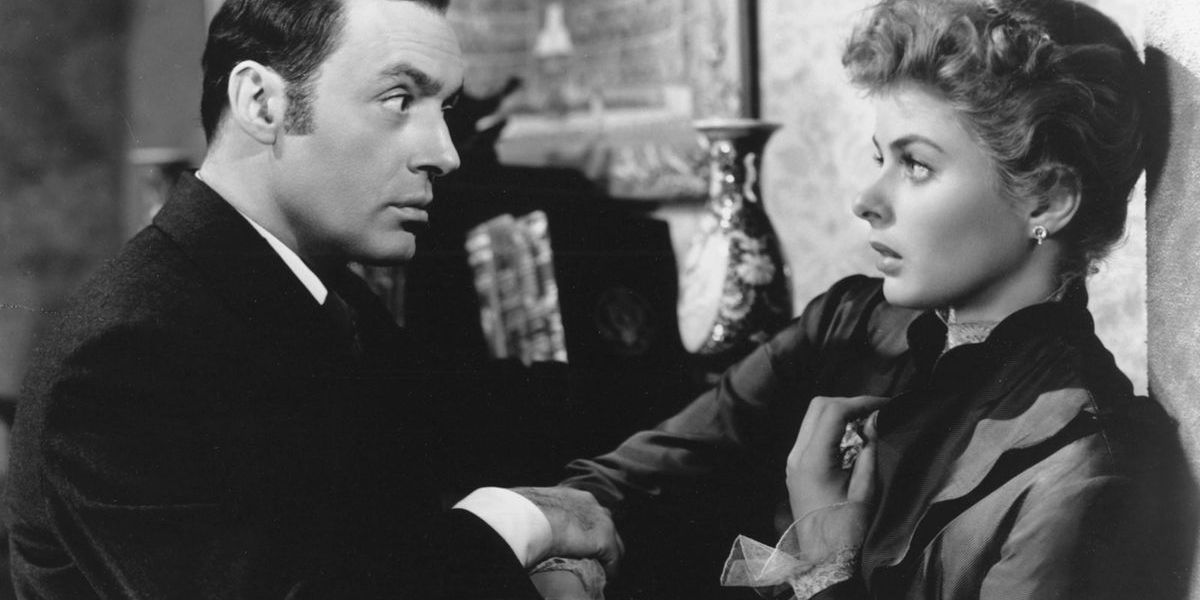
George Cukor'southward Gaslight isn't just a psychological thriller, it's officially synonymous with manipulation and horror. Literally, this motion-picture show's very title has entered the popular lexicon to describe a form of psychological abuse. Ingrid Bergman stars equally a young opera singer who meets the love of her life, a handsome older admirer played by Charles Boyer. But no sooner are they married and move into the London townhouse - where her mother was mysteriously murdered many years ago - does the relationship devolve into a nightmare. Our heroine, information technology seems, is losing her mind. Or is she?
Gaslight is a remake of a 1940 British thriller (which was nigh lost to history after MGM bought the remake rights and tried to destroy the original negatives). And while it may have twists that seem telegraphed today, at present that we all know what "gaslighting" is, the bleak and angry heart of the film notwithstanding pumps blood. Bergman'southward Oscar-winning performance, equally a adult female pushed to the brink of her mental endurance, is vulnerable and raw, trapped and clawing, captivatingly genuine, and Boyer's twisted villainy volition always be the stuff of goosebumps.
Rear Window (1954)
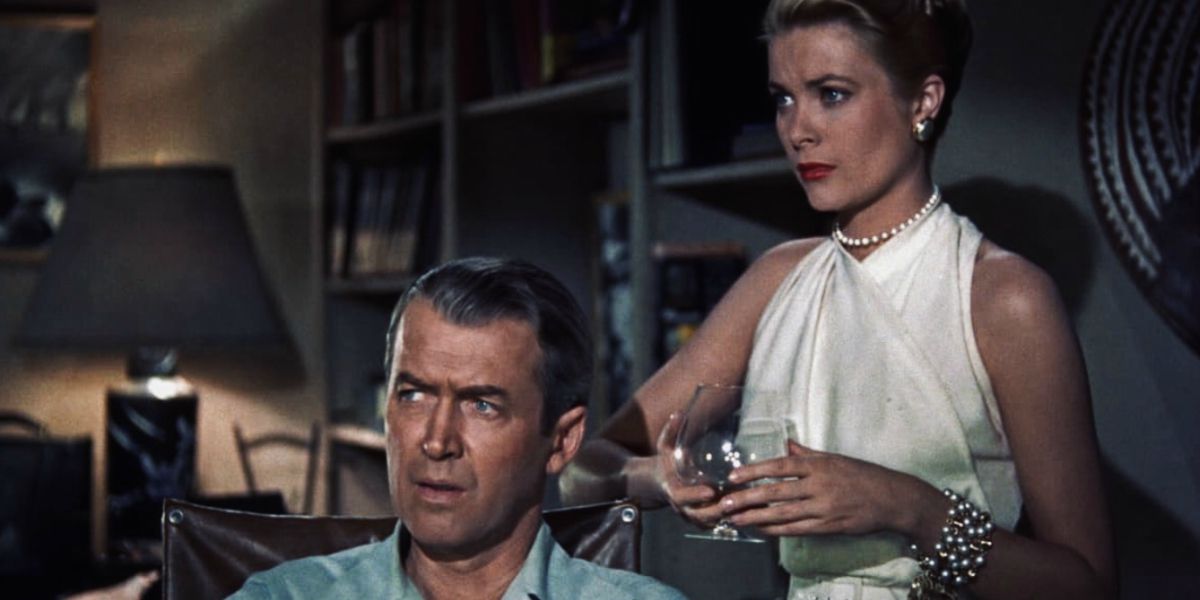
No catalogue of the great thrillers - psychological or otherwise - would be complete without Alfred Hitchcock, whose films transformed and frequently exemplify the genre. Rope , Spellbound , Shadow of a Doubt, and Vertigo all arguably deserve their ain entry here, just if we have to narrow Hitchcock'southward oeuvre down to one timeless classic, Rear Window deserves that honor.
Rear Window stars James Stewart stars as a thrill-seeking photographer, at present trapped in his apartment, and going a trivial stir-crazy, afterward breaking his legs in a work-related blow. So he amuses himself by spying on his neighbors, each of whom has their own unique personalities and foibles. It'south an obsession that infuriates his girlfriend, played by Grace Kelly, and which may become besides far, since he's pretty sure he just saw ane of his neighbors murder his wife. Possibly. Kinda.
Hitchcock films this whole movie from the interior of Stewart's apartment, limiting the range of movement we await from a movement moving picture, creating a claustrophobic environment and transforming everyone into voyeurs. By but witnessing what our hero sees, we don't even think to question his estimation of the crime. So whenever any of the other characters point out just how thin the actual evidence is (and it'southward sparse indeed) nosotros're forced to either deny logic and fall into our hero's paranoid mentality or admit - begrudgingly - that we may accept been cleverly tricked.
Les Diaboliques (1955)
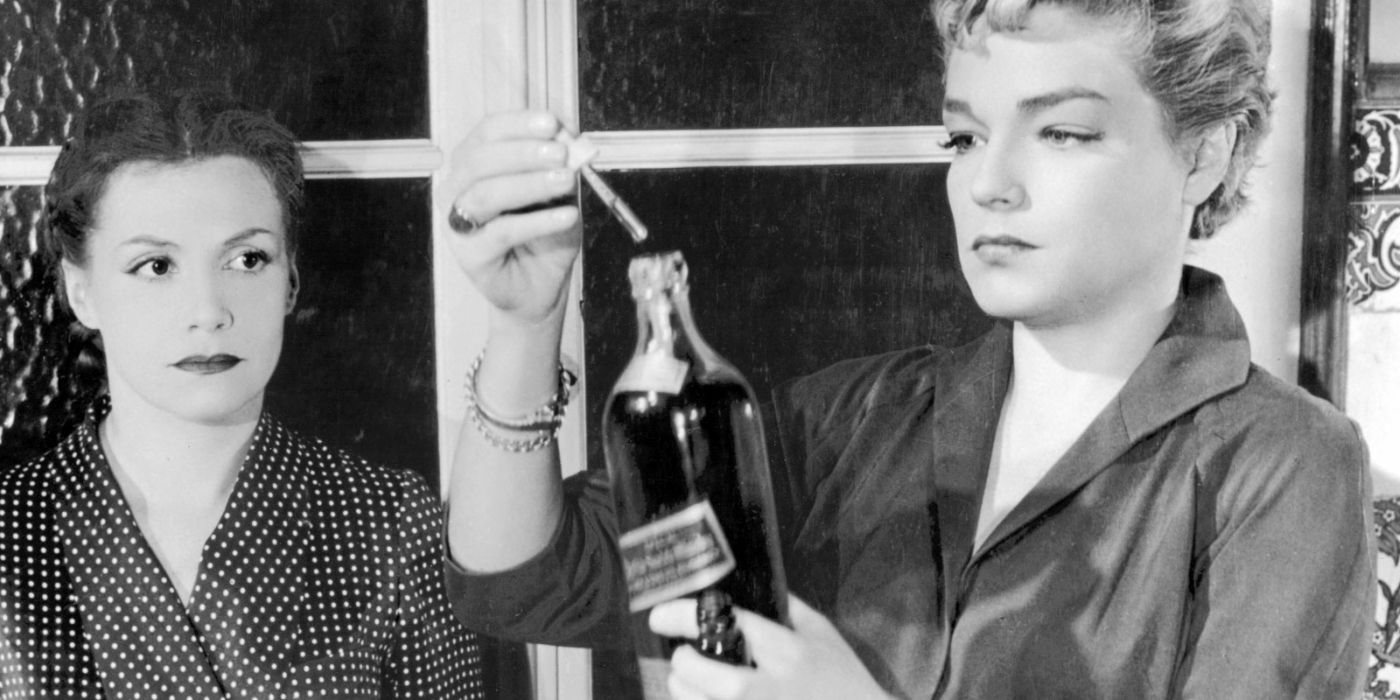
Henri-Georges Clouzot'southward ingenious and sultry thriller Les Diaboliquesouthward stars Véra Clouzot as the long-suffering married woman of an abusive husband, played by Paul Merisse. She'due south so isolated that her just friend is her husband'due south mistress, played by Simone Signoret, because she'southward the simply other person who understands just what a monster he is. What a twisted and unexpected state of affairs in which to find oneself; it'due south exactly the sort of force per unit area cooker relationship that seems likely to atomic number 82 to murder.
Which, of course, information technology does. At commencement, it goes just swimmingly. And then… the body disappears.
The attraction of Les Diaboliques goes well across its twisty-turny plot (which is twisty-turny equally all heck). Clouzot and Signoret are iconic equally dual femme fatales, one sensitive and guilt-ridden, the other unflappable and icy, thrown together into increasingly bizarre circumstances and thinking out all of their unthinkable choices. Les Diaboliques sinks you into a pool of suspense and suspicion, and forces you to drown in information technology.
The Bad Seed (1956)
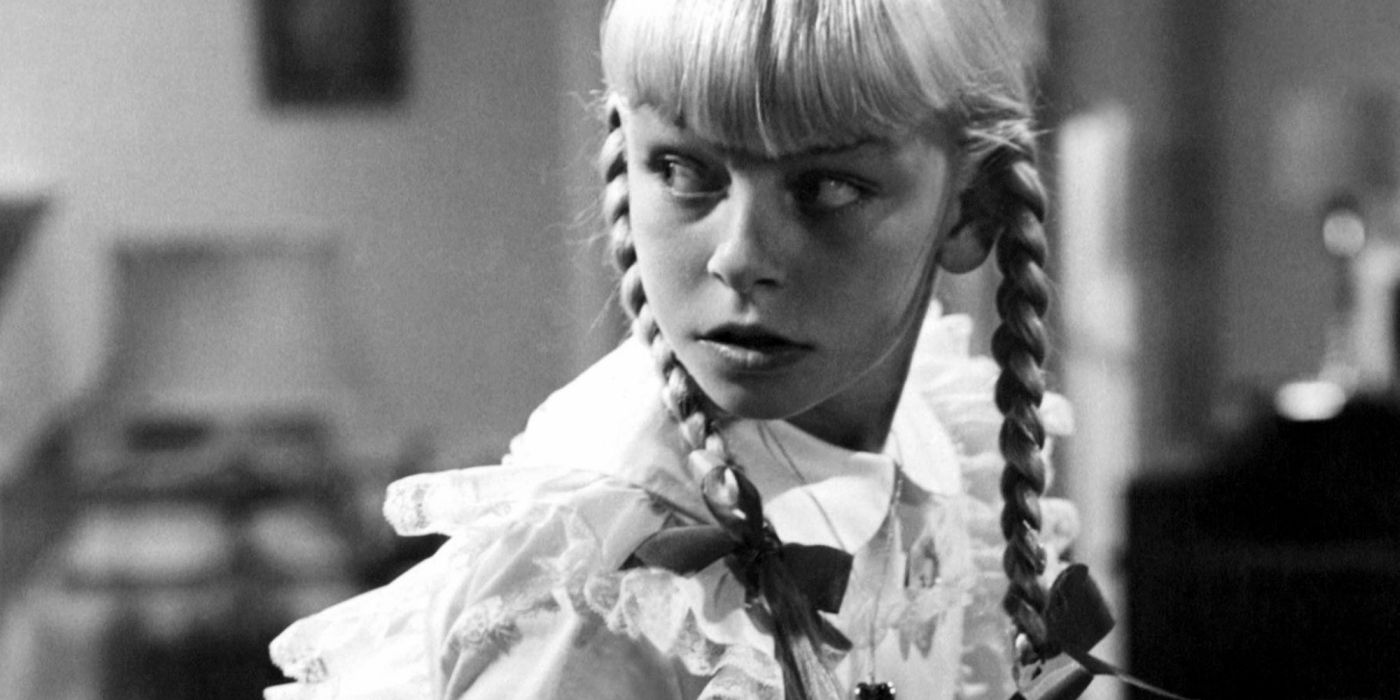
Everybody likes to think that their kid is perfect, even if they exercise bad things sometimes. But in the seemingly idyllic suburban world of The Bad Seed , Rhoda, an eight-year-old girl played by Patty McCormack isn't just a fiddling naughty sometimes. She's a series killer who knows only how to manipulate adults into thinking she's a precious niggling angel.
A child serial killer is frightening enough in the abstruse, but the real horror show of The Bad Seed is watching Nancy Kelly, playing Rhoda's mother, resist and so eventually arrive at that shocking realization that her little daughter is an unrepentant murderer. Both McCormack and Kelly were Oscar-nominated for their roles - every bit was Eileen Heckart as the mother of one of the victims - but Kelly steals this testify, peeling away the pieces of her sanity as she realizes only how evil her own precious affections truly is, and exposing a tangle of raw nerves underneath.
What Ever Happened to Baby Jane? (1962)
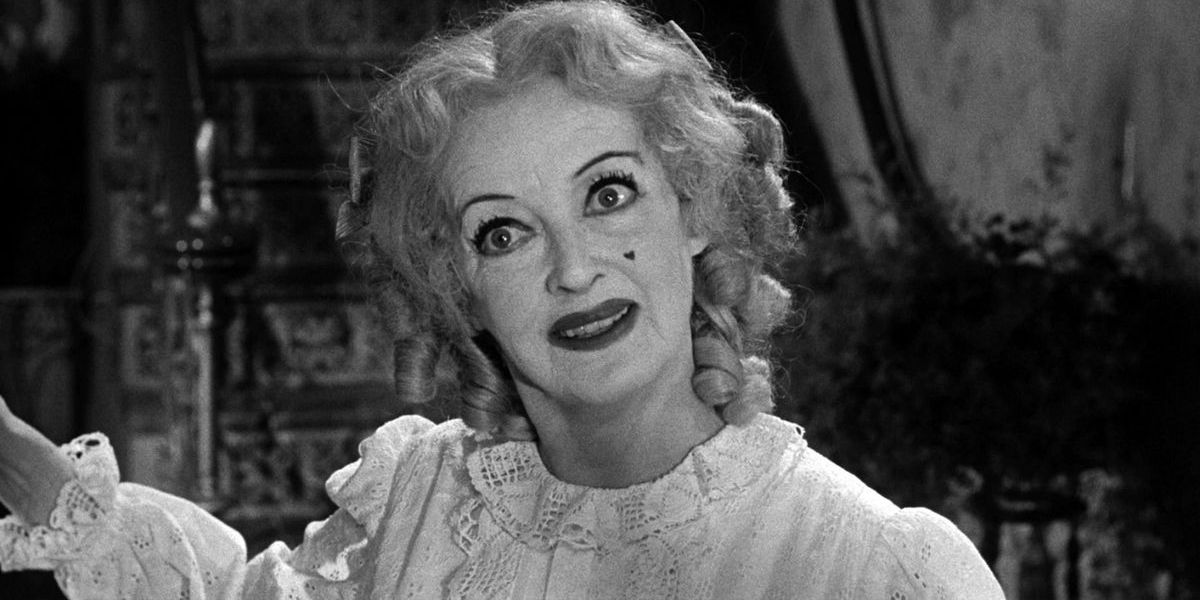
In the bizarre and grotesque What Ever Happened to Babe Jane? , filmmaker Robert Aldrich exposes what appears to be a deep-seated loathing for the entertainment industry, specifically the lifelong cost information technology takes on young performers. The film tells the story "Infant" Jane Hudson, a child star of the 1920s whose career eventually took a back seat to her sis, Blanche, who was the superior role player. A tragic accident left Blanche paralyzed, and left Jane blamed for the tragedy, and begrudgingly acceptable a role as her sister's unwilling caretaker.
Decades after, the Hudson house is a rat'south nest of festering resentment. Blanche, played past Joan Crawford, lives upstairs as the mercy of Jane, played by Bette Davis. The abuse Blanche suffers is shocking, and the decay of Jane'due south psyche is repulsive, only both Crawford and Davis are wholly committed to making this bizarre mutually destructive life seem plausible. These, the movie argues, are the larger than life consequences of living larger than life, and the gruesome fate that befalls these sisters plays out as though information technology was ripped from particularly salacious headlines, a tabloid story that couldn't be, and shouldn't be, but feels wholly true. Riveting performances and prurient dread await you.
Shock Corridor (1963)
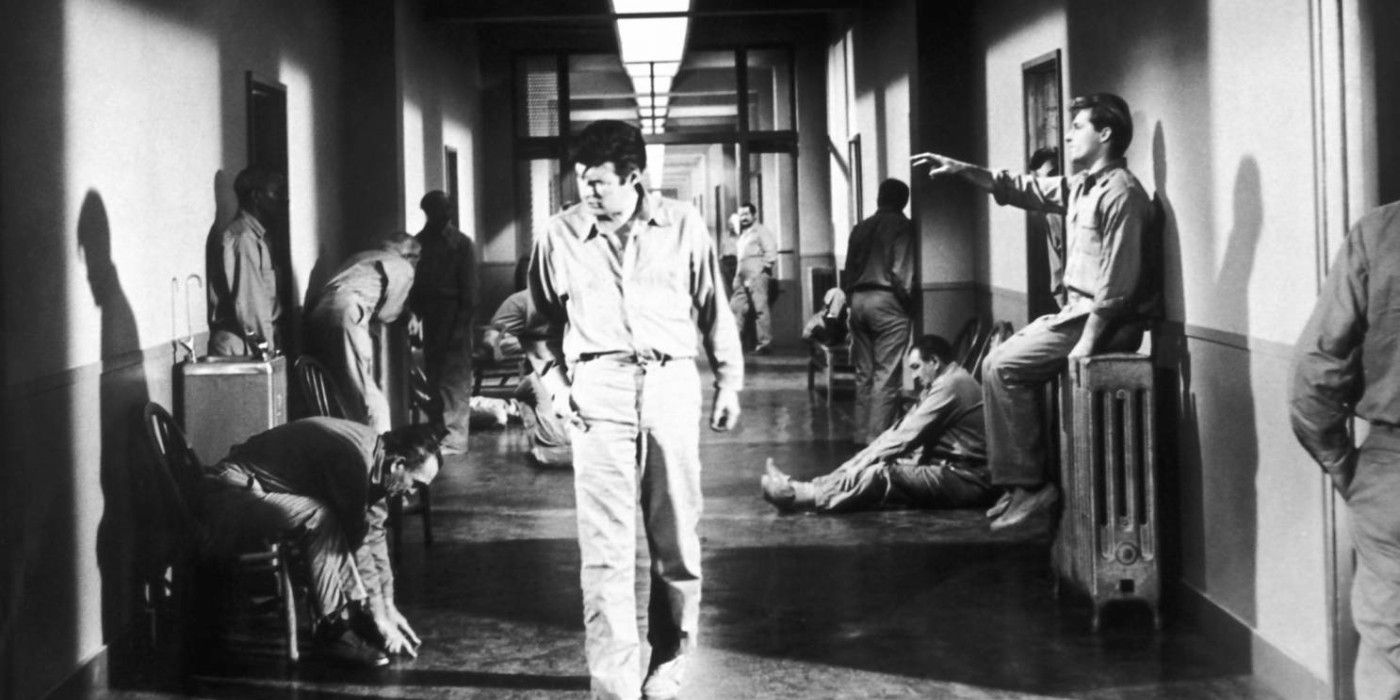
As a filmmaker, Samuel Fuller reveled in pushing narrative boundaries, and in his absolutely electric psychological thriller Shock Corridor he practically flare-up through them. Peter Breck plays Johnny Barrett, a journalist obsessed with winning the Pulitzer Prize, who embarks on a daring scheme to catch a headline. He volition go undercover in a mental hospital, live amidst the inmates, and become to the bottom of an unsolved murder.
It'due south the kind of idea that sounds clever on paper, just puts Barrett in a harrowing position. Without fill-in, without a confidante, without any chance of respite or escape, he'due south plunged into an surroundings of abuse, paranoia and mirage, and repeatedly falls under the spell of his fellow inmates. Whether or not he solves the murder becomes a secondary business; he'due south trapped in a never-ending battle for his own sanity. Outstanding performances, agonizing writing, and daring imagery continue Daze Corridor shocking over 60 years later on.
Repulsion (1965)
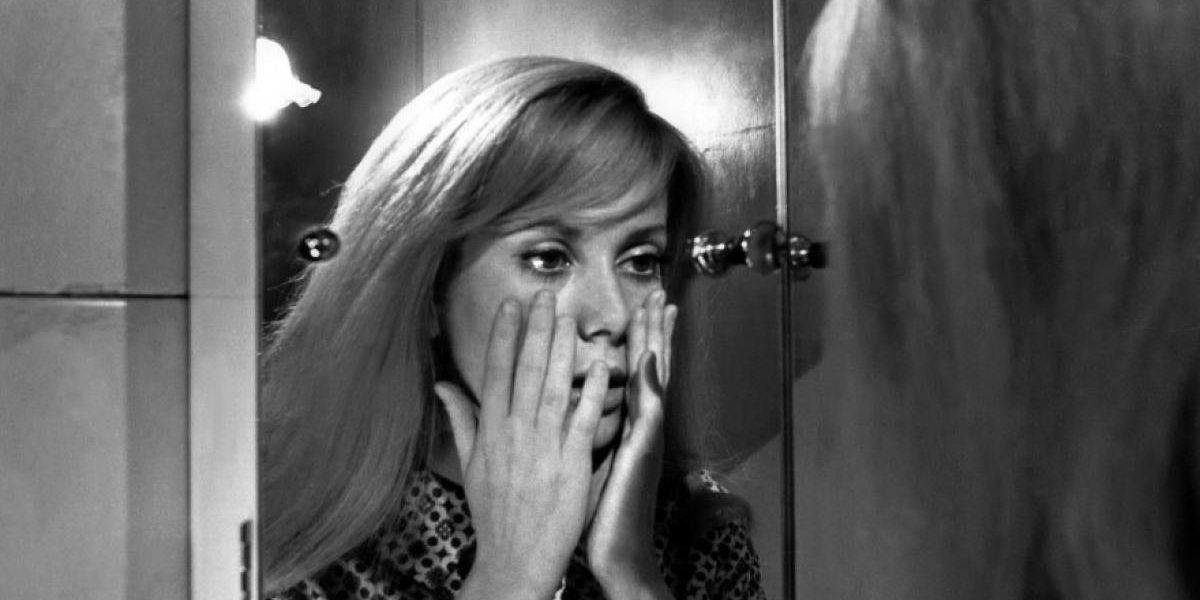
The almost threadbare simplicity of Repulsion may be jarring. Catherine Deneuve stars equally Carol, a immature adult female living with her sister Helen, who is repulsed past her sister's swain, her ain would-be suitors, and menial elements of her life which would, under usual circumstances, be minor annoyances. When Helen suddenly leaves town for a romantic getaway Carol is left to her own devices, and finds herself suddenly mired in her own anxieties, phobias, and, gradually, hallucinations.
The majority of Repulsion is just Catherine Deneuve fraying her nerves in an apartment, and however that but makes her descent into psychotropic horror seem universal. Devoid of contrivance and narrative trickery, Repulsion highlights the subconscious associations Carol has, revealing a web of unchecked, undiagnosed trauma that has finally been given an opportunity to fester, free from seemingly unwelcome distractions of other people.
Sisters (1972)
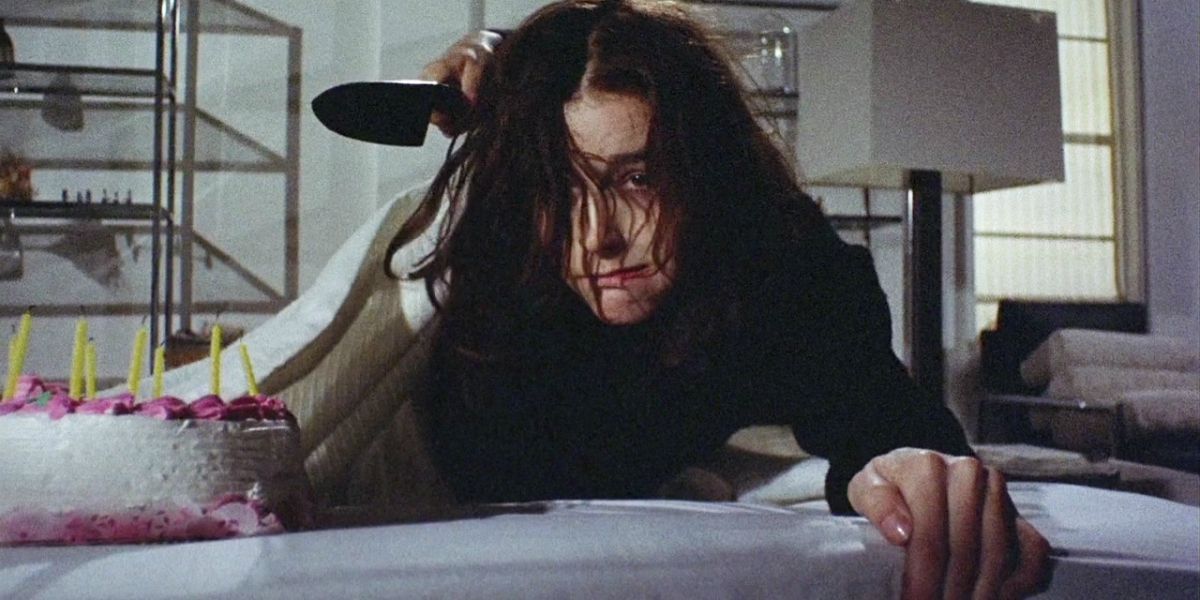
Brian De Palma crafted the majority of his career around acrobatically photographed, labyrinthine psychological, and frequently sexual thrillers. But although Dressed to Kill , Obsession , Body Double and Raising Cain are all stellar, whirlwind shockers, it's his first foray into Hitchcockian suspense that stands out. Sisters is a twisted, grotesque, unexpected delight.
The story of Sisters takes many sharp turns, get-go with an agreeable chestnut of voyeurism, segueing into immature love and jealousy, careening into murder, and then returning again to voyeurism. From there on out nosotros're in Nancy Drew territory, as a plucky young reporter, played past Jennifer Table salt, investigating a murder she's sure was committed by an aspiring extra, played by Superman 's Margot Kidder, or perhaps her identical twin sister. That is, until De Palma's Chiliad Guignol climax, where the rules go out the window and so does the mystery, equally though the filmmaker couldn't expect to show you lot just how disturbing and fascinating his imagination is.
The Baby (1973)
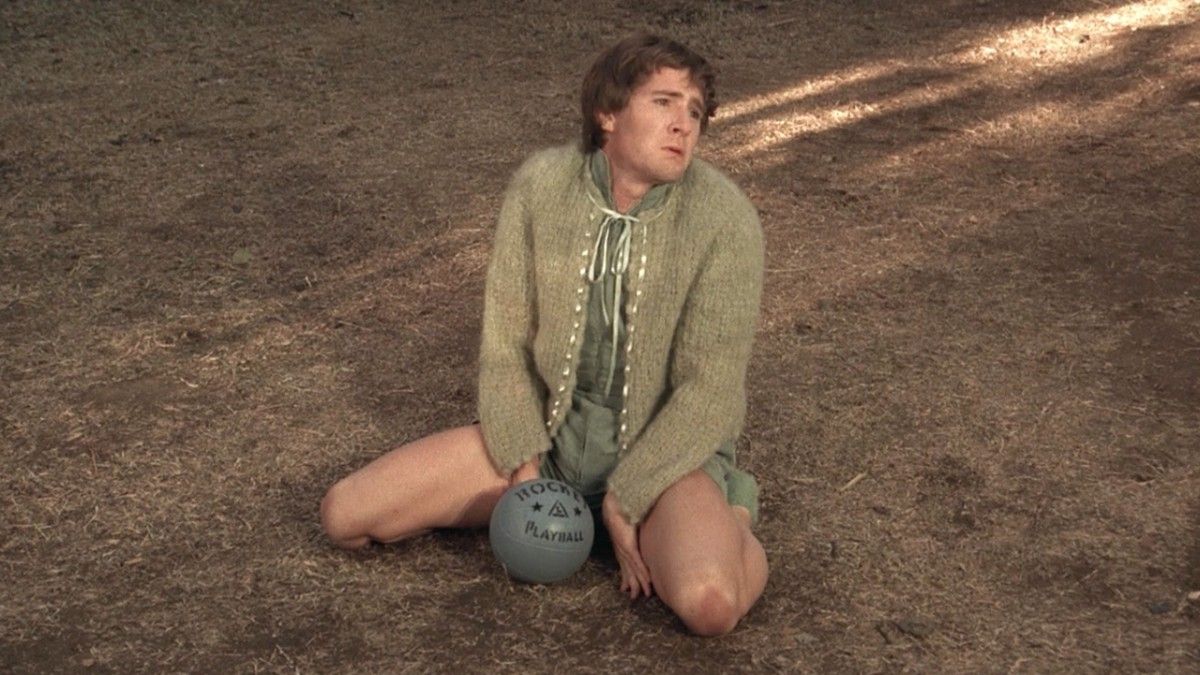
One of the strangest psychological thrillers you'll e'er see, and in a bizarre way one of the best, is Ted Post's disturbing grindhouse cult classic The Babe . This discomforting tale tells the story of a social worker named Anne, played by Anjanette Comer, whose latest assignment is the Wadsworth family. An abusive mother, 2 calumniating sisters, and a grown man called only "Baby," who lives in a crib, wears a diaper, cannot speak, and whose disability checks go on the family afloat.
The horrors that Baby endures on a daily basis are frightening, but what'southward more, Anne begins to notice that Babe'south status may exclusively exist the effect of the Wadsworth's abuse, and that he could be capable of living a typical, self-sufficient beingness. It's only when Anne decides to rescue Infant that we realize just how far the Wadsworths are willing to go to preserve their lifestyle, and how far Anne is willing to go to protect him. The Baby is strange, bold, and creepy in the extreme, and information technology does non go where you would expect.
The Chat (1974)
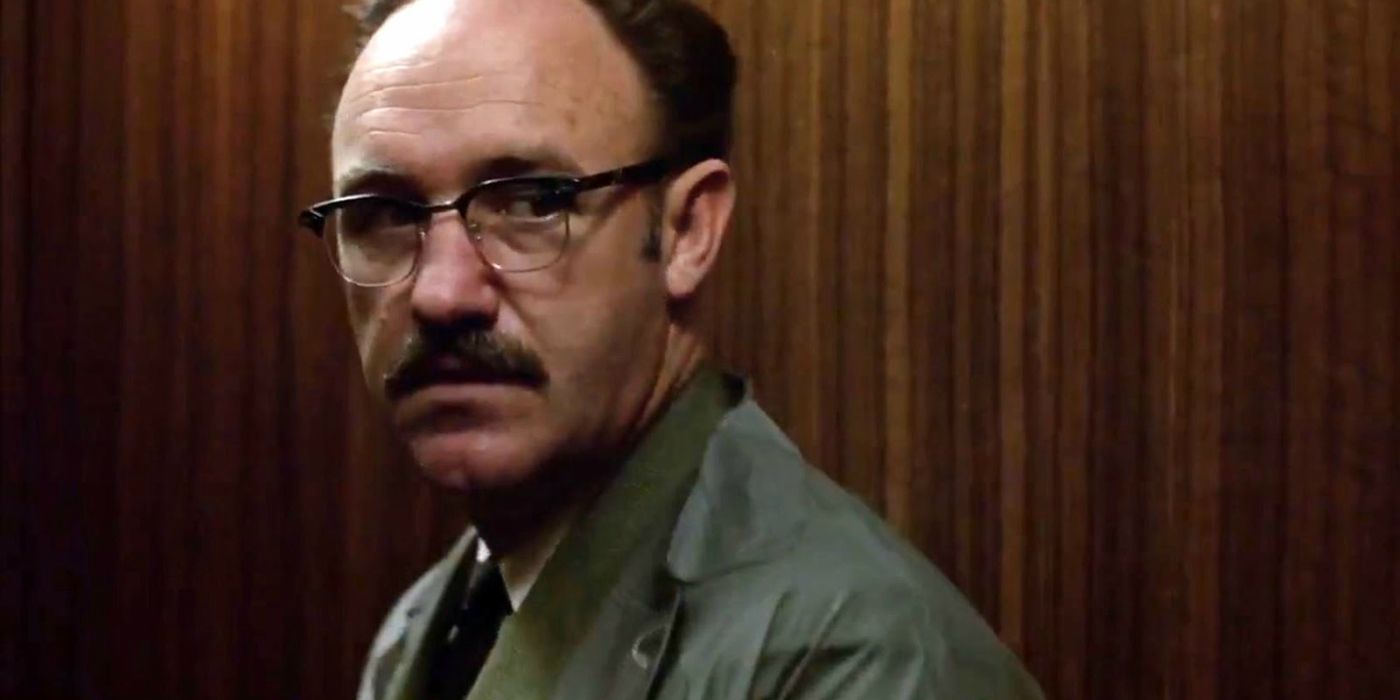
In the early 1970s, betwixt making The Godfather and The Godfather Office 2 , Francis Ford Coppola directed one of the best psychological thrillers always fabricated. The Conversation stars Gene Hackman as Harry Caul, a surveillance expert who records a conversation between ii young lovers, and examines and re-examines the audio obsessively, thinking he may have uncovered a murderous plot.
Inspired past Michael Antonioni's similar Blow-Upward - about a photographer who keeps enhancing an image, thinking it'south evidence in a murder - Coppola's film adds governmental paranoia into the mix, and highlights the lonely existence of a man who knows just how fiddling privacy in that location is in the modern world, specifically because he'due south so good at invading it. It'southward a profound graphic symbol piece, featuring one of the near nuanced performances of Hackman'due south career, and a smart and unexpected thriller about how piddling we know, no thing how much nosotros hear.
Manhunter (1986)
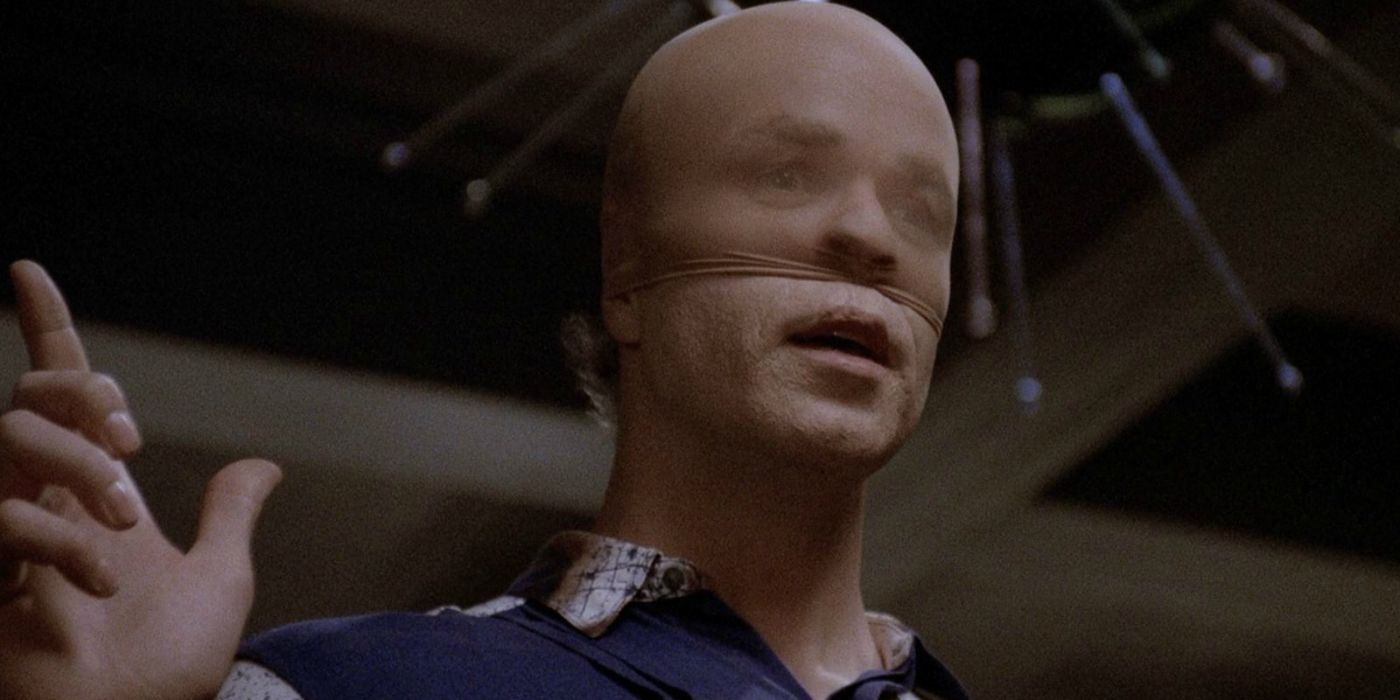
The first film adaptation of Thomas Harris'southward Hannibal Lecter novels, based on the novel Red Dragon, goes deeper into psychological terror than any of the others (at to the lowest degree until the Tv set show came forth). Michael Mann's Manhunter stars William Peterson as Will Graham, an FBI profiler who's so talented at getting into the mind of a killer that he loses his own personality and drowns in the darkness. Will is on the trail of "The Molar Fairy," a serial killer home invader with a unique M.O., and once over again starts to lose himself in his work, at the cost of his ain soul.
Hannibal Lecter appears, inexplicably named "Hannibal Lecktor," and played with a disarming casualness past Brian Cox, whose take on the character is more insidious and less mannered than the other actors who have taken on the role. That gives him the power to worm his manner into Will'southward mind more than nimbly, until they're chatting on the phone like teenagers. Meanwhile, as Mann brings out the madness in his protagonist, he's exploring the humanity of his murderer, Francis Dollarhyde, played by an impossibly frightening, and impossibly tragic Tom Noonan. Stylish and insightful and terrifying, and in some respects, perhaps the all-time adaptation of Harris's work to engagement.
The Stepfather (1987)
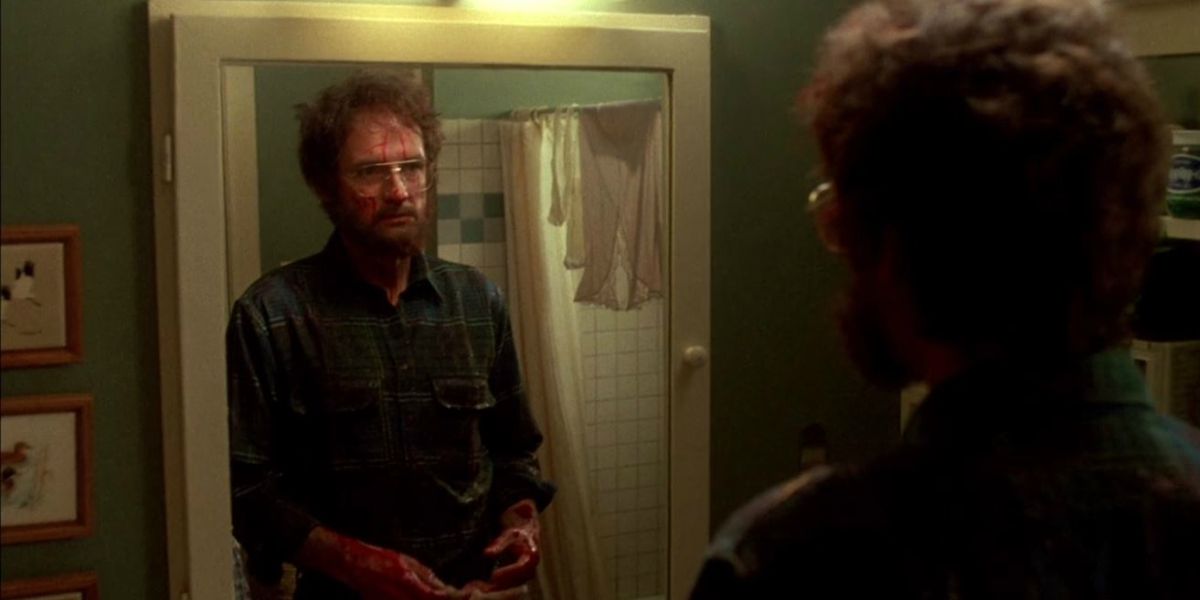
"Wait a minute," Jerry Blake asks his married woman. "Who am I here?" He really means it. Terry O'Quinn plays Jerry, a serial killer who insinuates himself into the life of single moms, marries them, and tries to alive the perfect American suburban life. When they fail to live up to his Reagan Era conservative values, he starts charming the adjacent single mom, living two lives simultaneously, and somewhen murdering the family that offends him.
Joseph Ruben's exquisite and frightening psychological thriller covers all the angles: the suspicion of a new father figure, the hypocrisy of the nuclear family, the perverse logistics of living multiple lives simultaneously. And at the eye of it all is O'Quinn, giving an all-timer performance equally one of cinema's most fascinating monsters, who really does seem to be searching for what American civilisation promised him, and who seems utterly incapable of understanding that he was lied to.
Dead Ringers (1988)
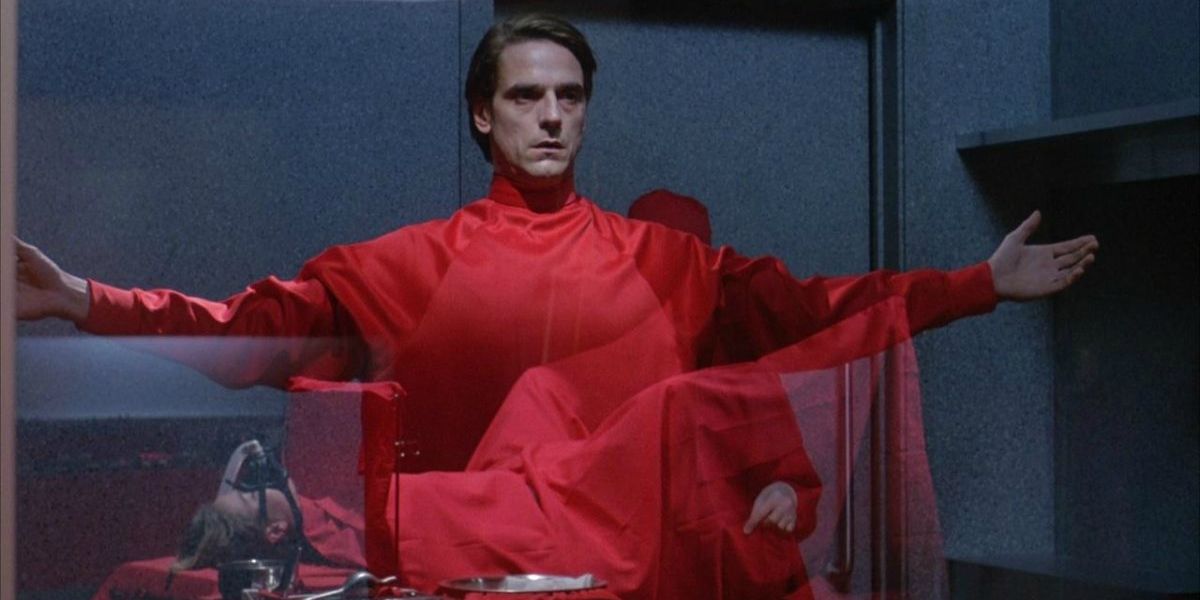
David Cronenberg spent the majority of his career exploring the terrors of the human torso, and our unnerving psychological obsessions with our own organics. Our diverse organs, including the brain, are inextricably linked - literally and thematically - and are all too easily malformed by his protagonists and villains. And while he'due south made several classic films along these lines, it is maybe Dead Ringers that stands out as his crowning accomplishment.
Jeremy Irons co-stars alongside Jeremy Irons, every bit identical twin gynecologists who share each other's work, each other'south lives, and - without telling them - the same women. Elliot is confident and domineering, Beverly is shy and sensitive, and when they begin a romantic relationship with one of their patients, played by Geneviève Bujold, the strain becomes too much to deport. Beverly sinks into depression and mirage, imagining his patients as baroque mutations, and Elliot soon sinks right in with him, choosing to alive with his brother, even on the brink of madness, no matter what the cost.
Irons gives two devastating performances, with subtle, impeccable editing creating the unmistakable illusion, using quondam-fashioned techniques, that he's somehow cloned himself. Dead Ringers is a technical marvel, and a sublimely weird, twisted psychological thriller.
The Vanishing (1988)
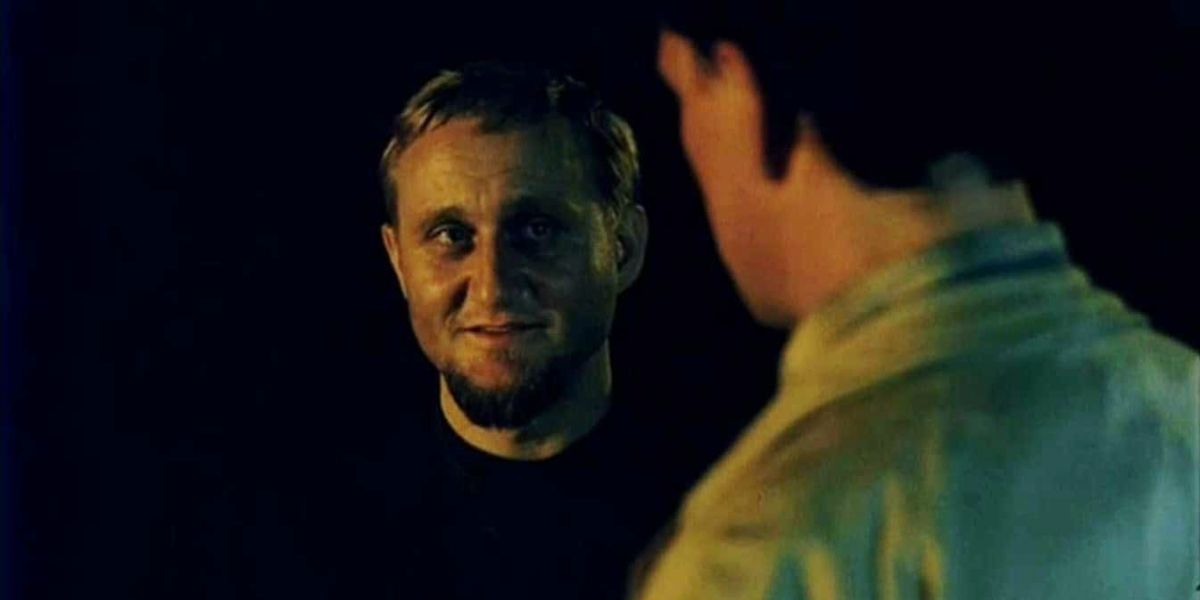
George Sluizer's absorbing Dutch thriller Spoorloos (aka The Vanishing) tells the story of a immature couple on a road trip. In the middle of a rest finish, Saskia (Johanna ter Steege) excuses herself to get drinks. Hours later she has non returned, and Rex (Gene Vervoets) cannot find her. Years after, the mystery all the same unsolved, Rex remains obsessed with solving the mystery of her disappearance and will exercise anything for the answer.
It'southward easy to sympathise Rex's obsession. Information technology's less articulate what Saskia's kidnapper, Raymond (Bernard-Pierre Donnadieu), has washed with her, let lone why. The Vanishing flits back and forth between true cat and mouse, teasing the answers and unveiling everyday villainy. Information technology's absolutely captivating how matter-of-fact the grotesque imagination and humdrum rehearsals of a terrible criminal offense can be, and by the end of Sluizer'south film, nosotros too are dying to know the solution to this insidious puzzle. And like King, we may very well regret that we asked.
(George Sluizer remade his own film in America in 1993, with Kiefer Sutherland and Jeff Bridges, and information technology's a textbook example of how Hollywood can ruin a bright story by focusing on pleasing a crowd instead of reveling in their torment. Whatever you do, see the original instead!)
Jacob's Ladder (1990)
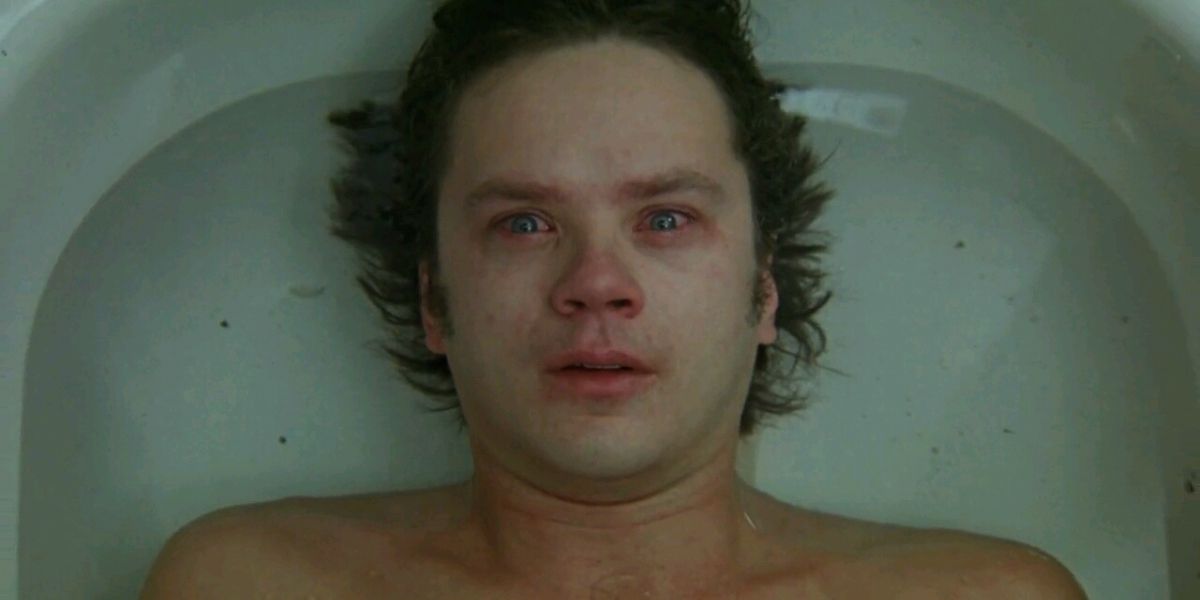
Jacob Vocaliser is a mild-mannered postal worker, recovering from post-traumatic stress disorder after a bloody tour in the Vietnam War. His family is no longer with him, his son died years agone, and he's just barely putting the pieces of his life together with his new girlfriend… when he sees a tentacle on the subway. And mysterious men with blurry faces. All the demons of hell seem out to become Jacob Singer, but is information technology his PTSD affecting him, or something far, far more sinister?
Adrian Lyne is a director best-known for sensual movie theater, films like Fatal Attraction , Unfaithful , and ix one/2 Weeks , but in Jacob's Ladder , he seems eager to explore the opposite of attraction. The repulsion that Jacob, played past an impressively vulnerable Tim Robbins, has for his present visions and his ugly past permeates into the grimy cityscapes around him. They represent a Hell of his heed'southward ain making, and past watching his story we are trapped in Hell with him. Jacob's Ladder is a surreal and captivating vision of psychological horror; information technology should come equally no surprise that it was a direct influence on the Silent Hill franchise.
301, 302 (1995)
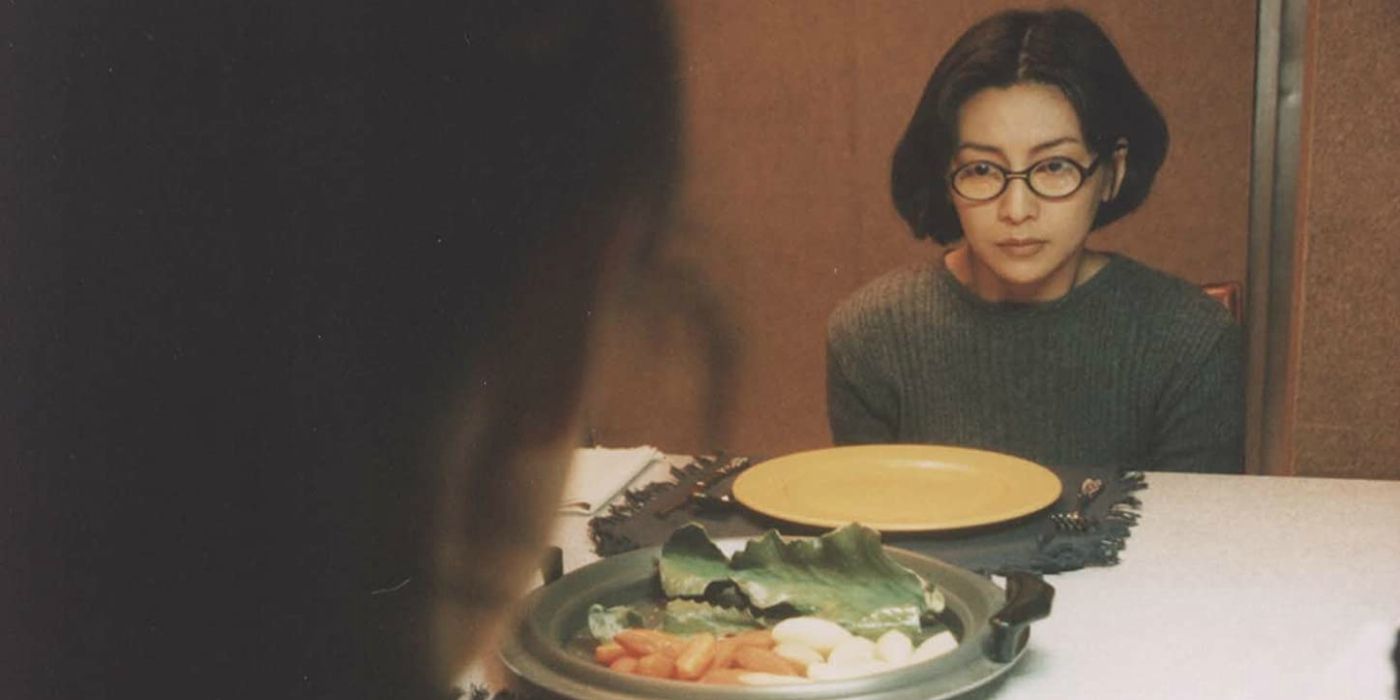
In Park Chul-soo'due south engrossingly gross thriller 301, 302 nosotros meet a pair of neighbors. Song-hee (Bang Eun-jin) lives in flat 301, and she's an aspiring chef. Yoon-hee (Hwang Shin-hye) lives in apartment 302, and she'southward a author with a debilitating phobia of nutrient. She when Song-hee tries to make prissy by cooking Yoon-hee delicious meals, she's offended to the indicate of obsession when she realizes her neighbor has been throwing them away uneaten.
Why, oh why, is Yoon-hee terrified of food? Vocal-hee will get the answers by any means necessary, and their story takes wild and unexpected turns. The answers we receive are not the answers everyone could possibly desire, and as the neighbors gradually class a unique relationship, we begin to realize that these two people should probably never have met, for the sake of sanity, for the sake of decency. Just for the sake of the audience, information technology's an unusual and absolutely riveting tale of cruelty and hurting.
Cure (1997)
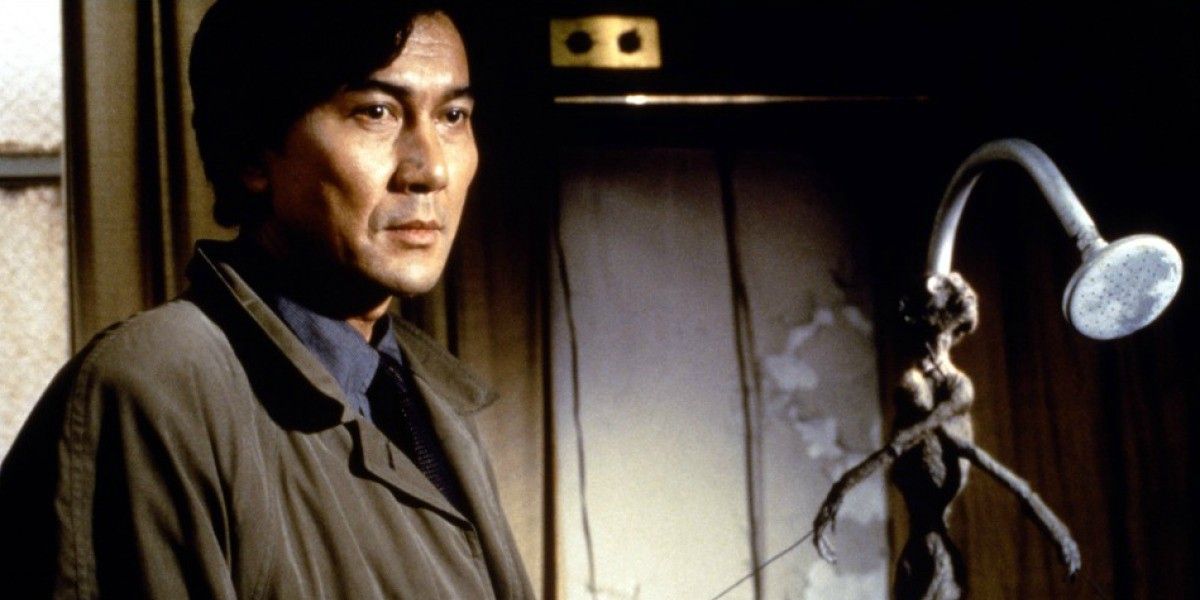
Kiyoshi Kurosawa'southward Cure may very well exist the well-nigh hypnotic psychological thriller e'er made, and quite literally. Cure tells the story of a detective, played on past Kōji Yakusho, tasked with solving an incommunicable series of murders. In each example a person was murdered, the murderer is found nearby, with no memory of what happened or why. And the just connexion between them is a mysterious drifter named Mamiya (Masato Hagiwara) who doesn't even know who he is or where he is.
What he does know, and what both Mamiya and Kurosawa employ all too well, are the techniques of hypnosis. Mamiya lulls everyone in his path into a psychologically pliable state, under they are impressionable enough to do almost anything. Kurosawa lets the technique play out for the audition as well, giving Cure a unique sense of cinematic thrall. Its horrors are tranquil. Its evils are nether the skin and deep inside of you. It's ane of the very finest films of its kind, and ane of the pinnacles of the psychological horror genre.
Perfect Blue (1997)
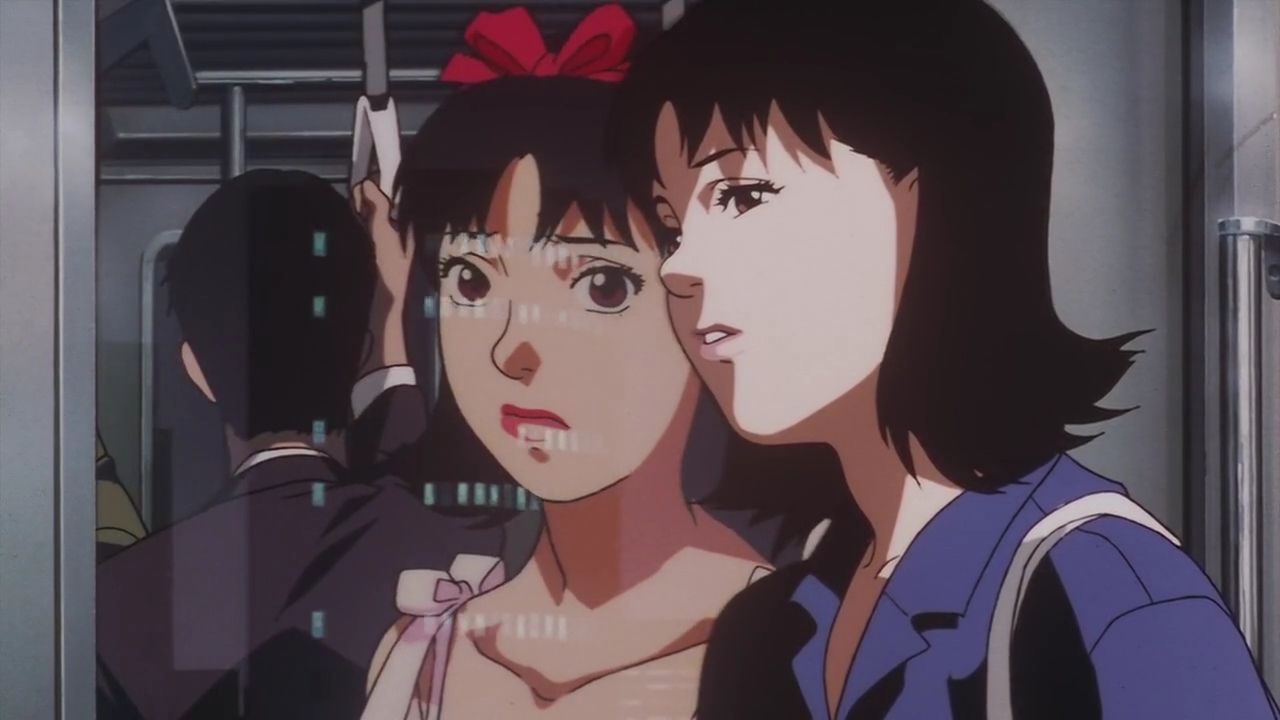
Japanese animator Satoshi Kon'south likewise-brusque directorial career comprised just iv feature films earlier his decease, all of them bright, as well as the unbelievably ingenious mini-series Paranoia Amanuensis . The psychotropic and inventive thriller Perfect Blue was his debut, and it remains a watershed for the genre, cleverly foreshadowing techno horror, cracking open the perils of mod celebrity culture, and the dangers of losing oneself in their work.
Perfect Blue tells the story of a teen music icon, Mima Kirigoe (Junko Iwao), who decides to give upwards her extremely popular band and pursue a career in acting. To her fans, who refuse to allow her to change or alive her own life, it's a personal expose. To Mima information technology'south a pitfall into insecurity and a crisis of identity; who is she really? Is she who she thinks she is, who anybody else says she is, or who she plays on Television receiver? And how is it that there's a blog online that knows everything she's doing, and even what she thinks while she'due south doing it, if she's non posting it herself?
Energized, creative and influential, and genuinely frightening, Perfect Blue made a mark on the thriller genre and turned Koa into a filmmaker's filmmaker, with directors like Darren Aronofsky and Christopher Nolan both taking direct inspiration from his distinctive imagery and storytelling way.
American Psycho (2000)
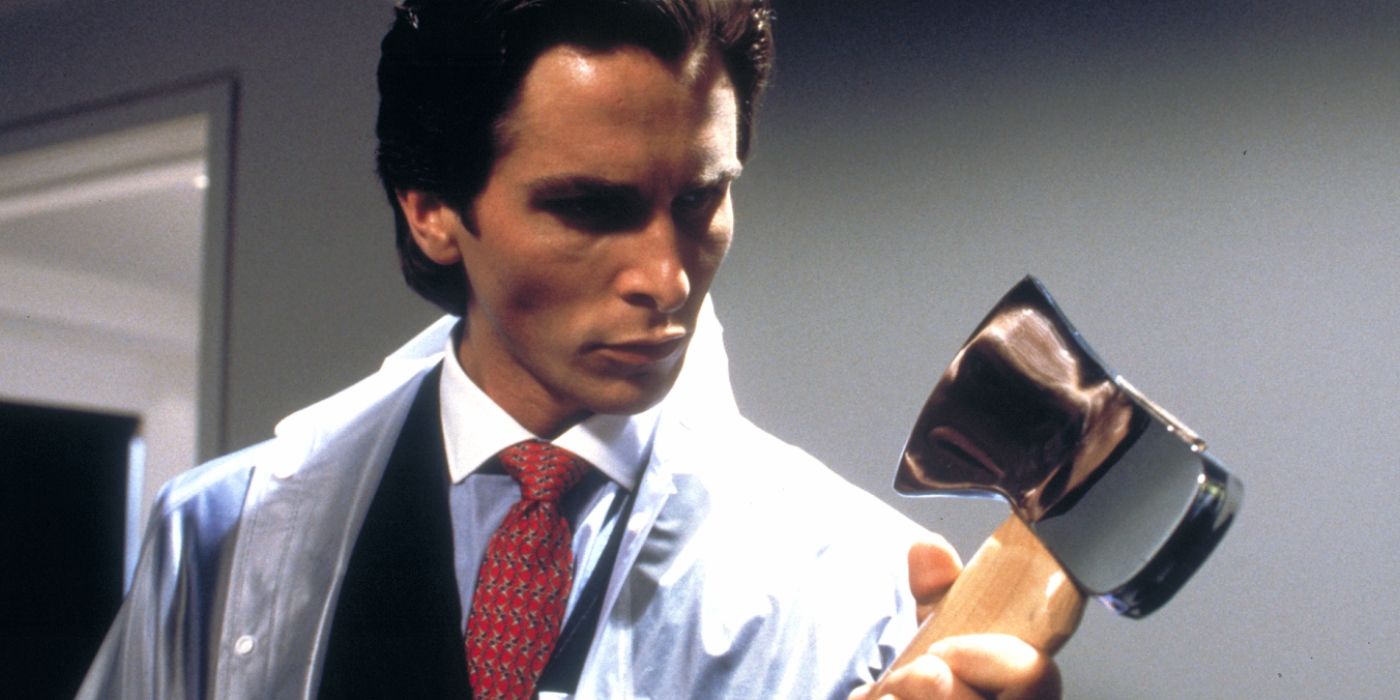
American Psycho is, on the surface, a series killer story. Christian Bale plays Patrick Bateman, a handsome yuppie in the 1980s who works in finance, takes extremely good care of his torso, and lives a life of absurd luxury. He's likewise homicidal, and over the course of the film murders co-workers, sex activity workers, and even tries to feed a cat into an ATM.
Only Mary Harron's film isn't a mere saga of violence and brutality. It's a bitter and incisive comedy, in which the horrors committed past Bateman are balanced by the applesauce of his frail ego. Here is a muscular Adonis, a titan of industry, whose psyche can be shattered past the appearance of a business card more stylish than his ain. The horrors of American Psycho are clear, and threatening, merely the existent nightmare is the possibility that fifty-fifty Bateman's most violent, powerful fantasies are zilch more an immature, macho fantasy. Or worse, that the world exists explicitly to cater to immature, macho fantasies, and enable the worst and almost pathetic brand of toxic masculinity.
However you read it, American Psycho is a ripping psychological thriller, and a bitter indictment of the mentalities that feed into the so-called "American Dream," specifically of manliness and success.
Memento (2000)
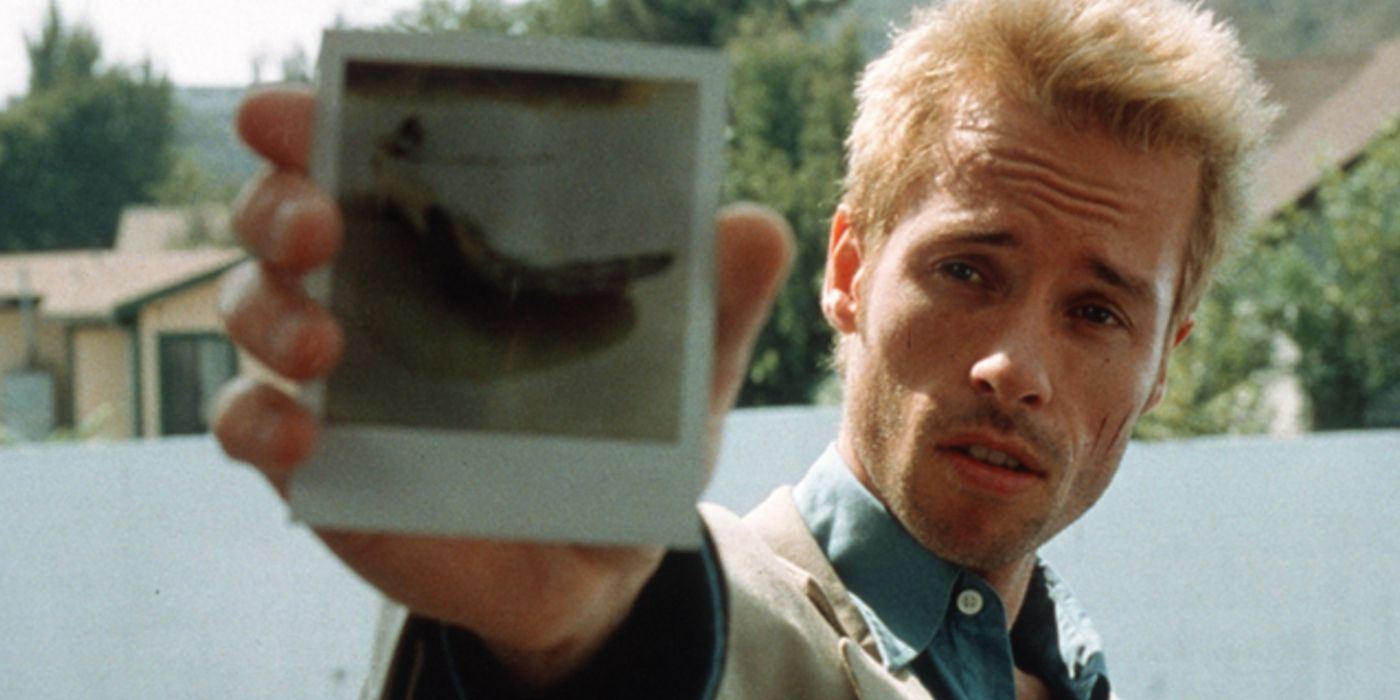
Christopher Nolan'south second and breakthrough feature stars Guy Pearce as Leonard Shelby, a man with anterograde amnesia, who cannot make new memories. Equally a result, every few minutes he has to reorient himself, and ask where he is and what he is doing. Placing that man in the center of a murder mystery is an ingenious chip of plotting. Editing the moving picture effectually his signal of view - i.due east. telling the story in reverse guild scene-by-scene so the audition is constantly re-orienting themselves besides - is beyond brilliant.
Memento can't help but feel like a "gimmick movie," because of course, that's what it is. The unique storytelling gimmick is undeniably role of the film'south appeal. Only Memento doesn't rest on its laurels and let the gimmick practice all the work. Information technology'southward a tragic drama of cycles and reversals, of expose and futility. The unique psychological state of the hero propels the movie in unusual directions but the story would hold up if told in chronological order, a canny flake of screenwriting that Nolan presents impeccably. Memento is nevertheless, perhaps, the filmmaker's greatest marvel.
Mulholland Dr. (2001)
David Lynch tells stories on the border of reason, usually leaning in the other direction. Sometimes there's simply a tenuous connectedness to reality of any kind, but in that location are merely enough threads connecting the filmmaker's hallucinatory imagery and dream-logic events to our universal anxieties to make them seem powerful instead of simply weird. Blue Velvet , Eraserhead , Lost Highway, and Twin Peaks: Fire Walk With Me are all must-see films for enthusiasts of the psychological thriller genre, but his masterpiece may very well be Mulholland Dr .
And frankly, it's a minor phenomenon that the film works at all, since information technology's been repurposed from a failed Boob tube pilot, which was given a new and completely dissimilar ending to quickly wrap upward all the threads. Naomi Watts stars every bit a young and idealistic ingenue who moves to Hollywood and apace takes upwardly with an amnesiac, played by Laura Harring, who may be on the run from murderers. Together they navigate the twisted earth of backside the scenes studio conspiracies, the underground dream globe of contained theater and, nigh shockingly, a revelation that will destroy them.
Mulholland Dr. is perhaps Lynch's nearly successful thriller, whether or not it's his best picture, because the new finale wraps everything up satisfactorily, while nevertheless never quite explaining what the nightmare behind the diner really was. It provides the thrills we seek, the depth nosotros crave, and the inexplicable mysteries nosotros couldn't perchance solve without ruining the mystique.
Oldboy (2003)
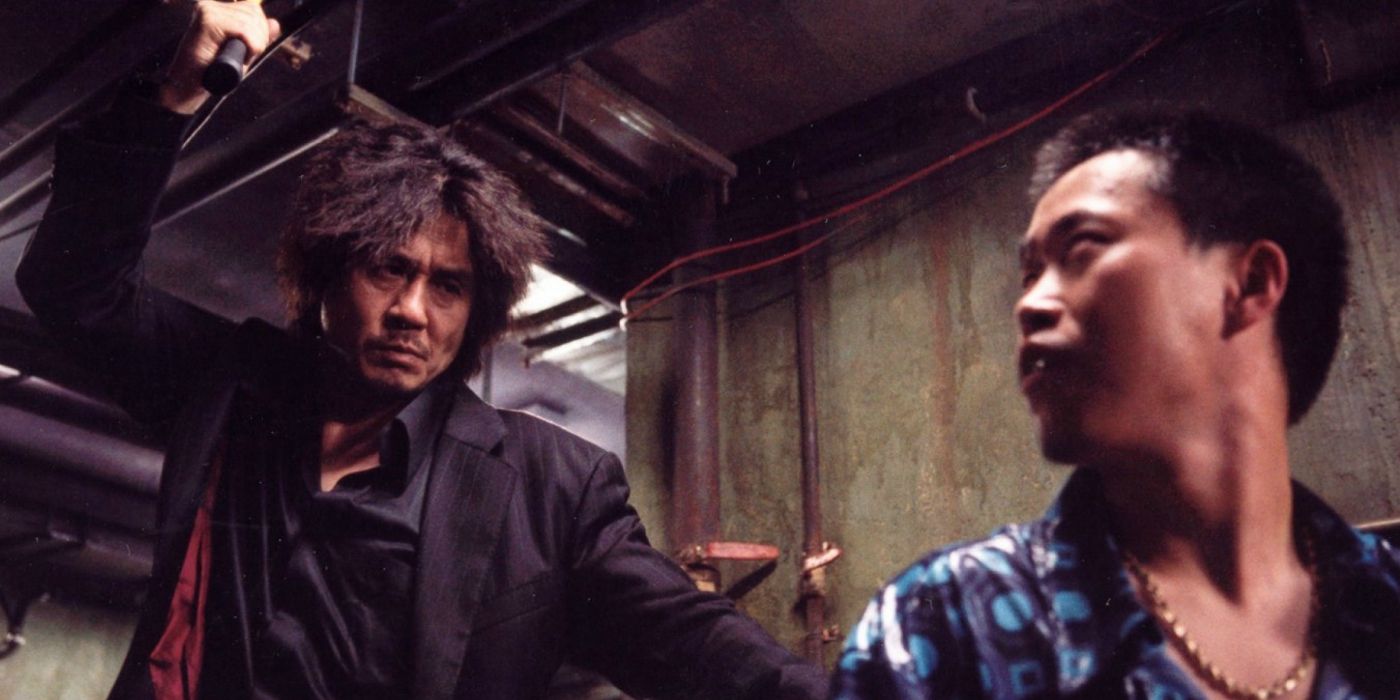
Imagine it: You're kidnapped, you're placed in a motel with nothing merely a Television receiver for company and dumplings for breakfast, tiffin, and dinner. You lot're never allowed outside, you never have anybody to talk to, and you lot never know why you've been imprisoned. And 15 years afterwards you're inexplicably freed, and told you have to solve the mystery of why you were punished.
Park Chan-wook'south Oldboy is a hell of a set-upwardly, simultaneously specific and soaked in the unknown. Equally the protagonist, Oh Dae-su, actor Choi Min-sik rides the fine line between tragic victim and propulsive hero, forcing his manner into his own by to make up one's mind what egregious wrong he could have peradventure committed to deserve such a fate. And when the motion-picture show finally reveals its hand, information technology presents a concept so uncomplicated and radical information technology blows the mind: what if y'all destroyed someone's life without having any idea y'all did it?
Oldboy features dynamic activeness and absolutely jaw-dropping plotting, and the climax is i for the ages. The remake, directed by Spike Lee, comes across like a pale faux, right downwards to the insufficiently happy, Hollywoodized finale. The original is a archetype. Stick to it.
Caché (2005)
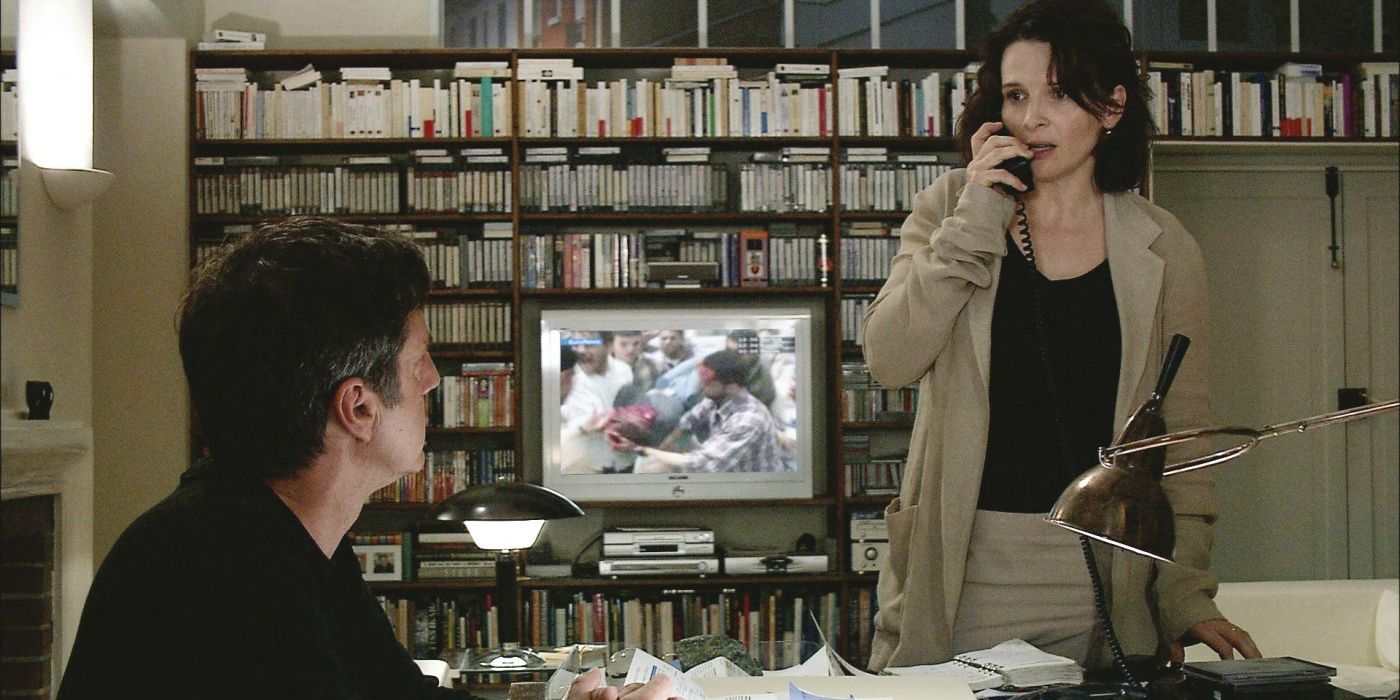
Georges and Anne are an unremarkable, upper course French couple, who discover - to their horror - that they are being watched. Every day a video arrives on their doorstep, with footage of the front of their business firm. No threats, no message, simply ane person's clear obsession with observing them.
What Georges, played by Daniel Auteuil, and Anne, played by Juliette Binoche, decide to do with this information says a lot about them. The supposition is that they should feel guilty, that the past has come back to haunt them, just which sin? Without whatever inkling they decide to dig into the past on their own, and what they discover is the wretched turn down of a life filled with mistakes, not different whatsoever other, where pettiness and selfishness had consequences they could non possibly accept fathomed.
Michael Haneke's Caché is elusive and mysterious, and the only solution it provides, in the terminate, is so subtle information technology's easy to miss the first time around. Simply it's a fabulous and paranoid puzzle of a movie, one that speaks to anyone with the capacity for guilt and shame.
Gone Girl (2014)
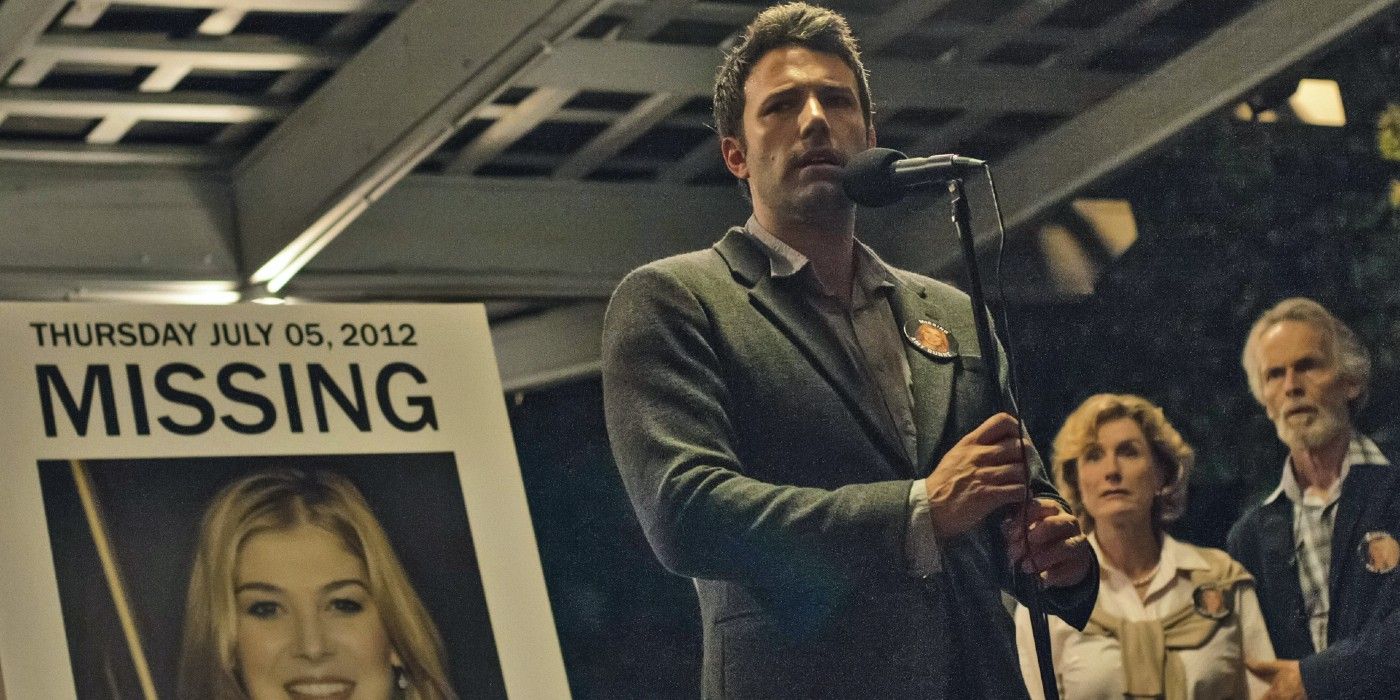
David Fincher's Gone Girl plays similar a lurid plane novel, but hiding beneath the salacious storyline and the borderline campy violence is one of the filmmaker's near bitterly observant motion pictures. Ben Affleck stars as a teacher, Nick, who'due south married to Amy, played by Rosamund Pike, who famously inspired a series of children's books. Information technology'southward non a happy marriage, so when Amy goes all of a sudden missing under suspicious circumstances, the media blitz quickly turns on Nick and makes him the prime suspect, ensnaring him in exactly the sort of oppressive high profile web that trapped Amy for many, many years.
Where Gone Girl goes from there would exist a crime to reveal, but let'southward just say at that place'due south more to the story, and Fincher and screenwriter Gillian Flynn, adapting her own best-selling novel, have bigger ideas across mere murders and mysteries. Gone Girl explodes the thought of wedlock, of living in public, of being perceived as an object or an icon. Rosamund Throughway is next-level fantastic in a multifaceted role, at in one case harrowing and hilarious and tragic, and Affleck gives one of his finest performances as a human being endlessly manipulated.
Searching (2018)

The debut feature of Aneesh Chaganty takes place entirely on computer screens and cell telephone screens, a gimmick Chaganty did not preclude simply may very well take perfected. Searching stars John Cho as a single father whose teenaged girl goes missing, and who must cascade through all her private chats, contacts, and social media accounts to investigate her disappearance.
It's a clever fix-up for a thriller, implemented to perfection with canny editing and conscientious visual storytelling. But possibly most notably, because of the position of the cameras, Searching relies almost entirely on John Cho's face to convey the emotional core of its seemingly uncomplicated narrative. Watching this man seek out his daughter in desperation, and then gradually come to terms that he lost his daughter long agone, and never really knew her in the start identify, but makes an impact because Cho sells the story with his every glance, his subtle realizations, and his mounting agony.
About The Writer 
Source: https://collider.com/best-psychological-thrillers/
0 Response to "What the Best Psychological Thriller Books Like Steel House Lake"
Postar um comentário